

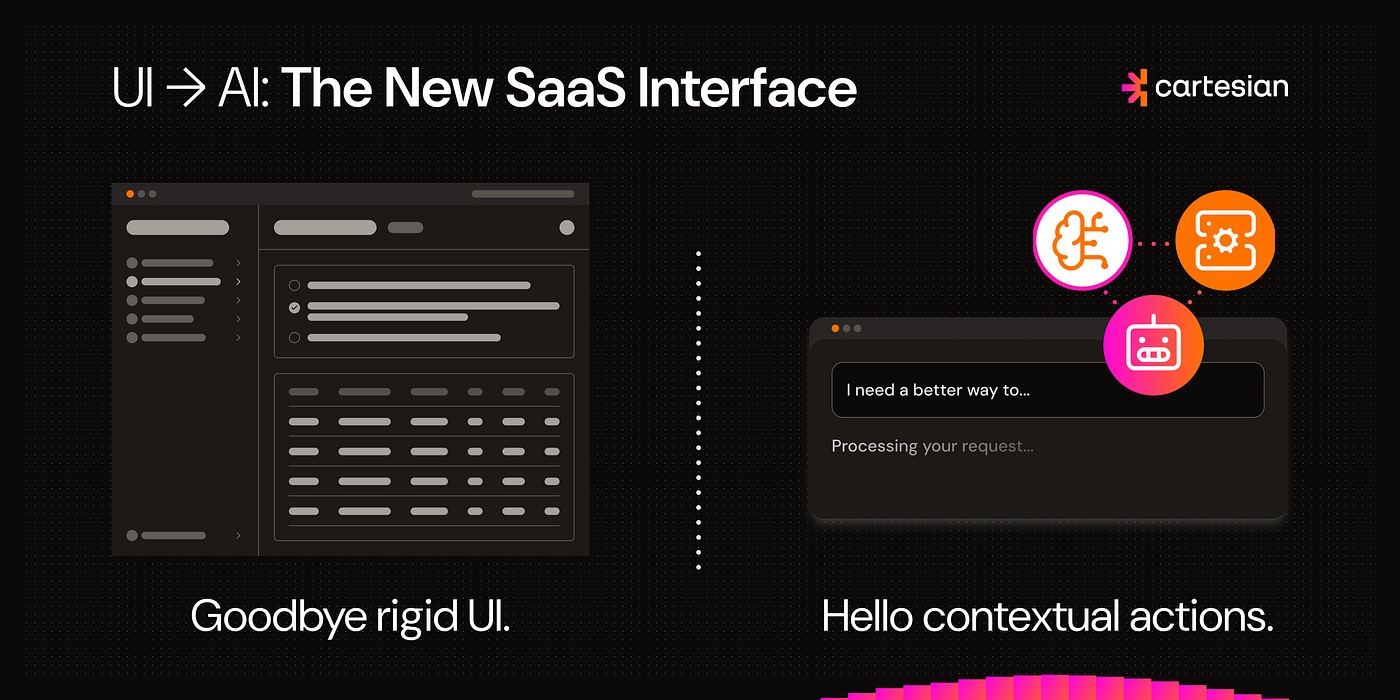
In the rapidly evolving SaaS landscape, AI agents are no longer just enhancing ecosystems, they have become core to ecosystems. Once considered mere automation tools for specific tasks, AI agents have evolved into the engines that drive entire platforms. This shift is revolutionizing how sales and product managers engage with software, creating a more intuitive and seamless user experience.
The Evolution of AI Agents in SaaS Ecosystems
Initially, AI automation was adept at handling isolated tasks, scheduling meetings, generating reports, or automating marketing campaigns. AI agents have evolved into complex systems capable of orchestrating workflows, making decisions, and adapting dynamically to user behaviors.
A key driver behind this transformation is Meta-Prompting, an emerging approach where AI agents use prompts to engineer better prompts. This recursive learning mechanism enables AI-powered ecosystems to understand and execute commands with increasing accuracy. The result? A dramatically improved user interface where users can simply describe their needs in natural language and have them fulfilled with high reliability.
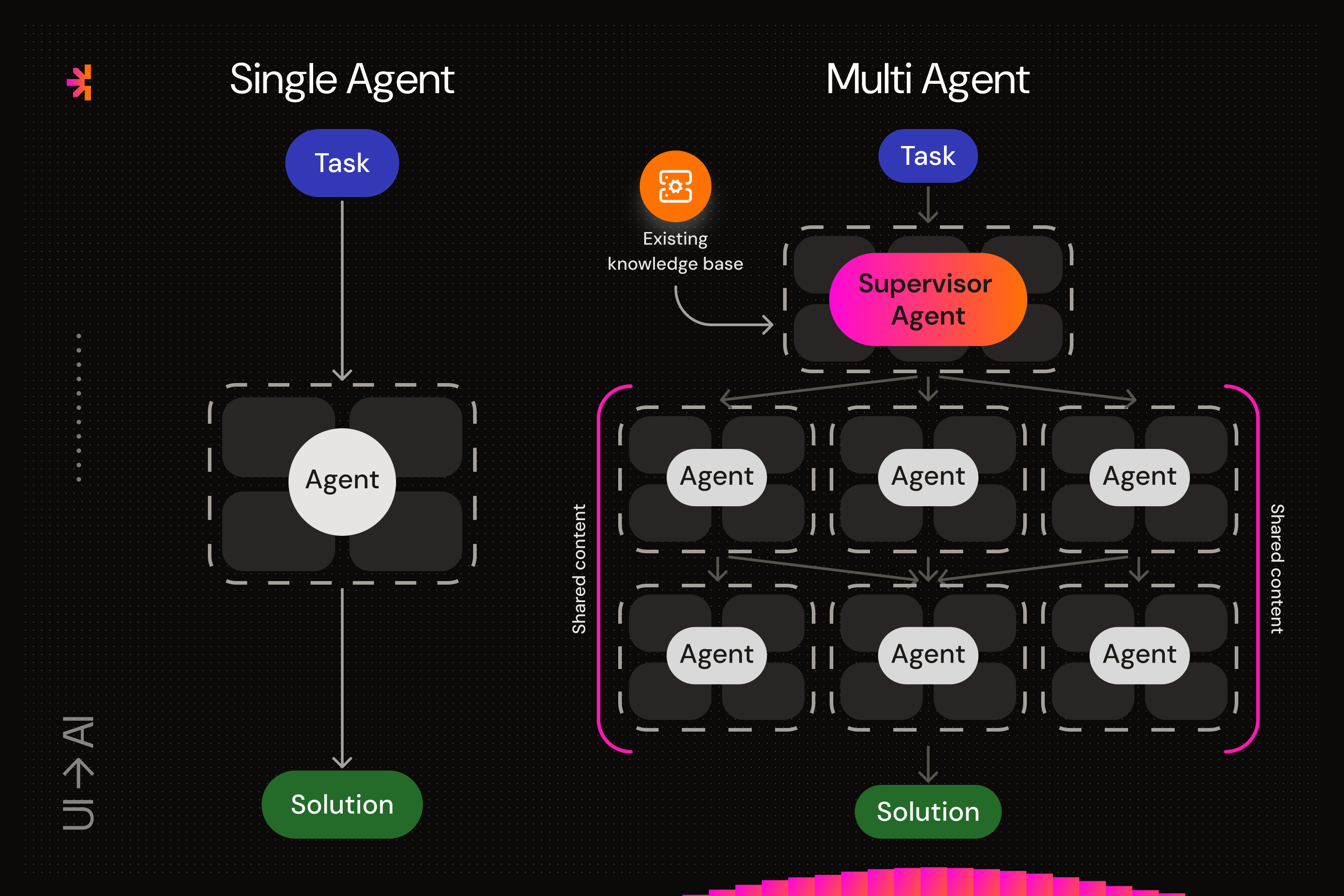
Another significant shift is the move from single-agent AI systems to multi-agent AI ecosystems. Instead of relying on a single AI entity to handle all tasks, modern platforms now deploy multiple specialized AI agents that collaborate, each handling distinct aspects of decision-making, workflow automation, and user interaction. These AI agents communicate with each other, share context, and optimize results collectively, making AI-driven ecosystems more robust, scalable, and adaptive to complex user needs.
As AI ecosystems evolve, platforms like Linear emerge as ideal environments for AI agents to thrive. As Linear’s CEO recently pointed out, the platform already coordinates work among human co-workers in a structured way, making it well-suited for AI co-workers. This aligns with the broader industry shift where AI agents are no longer just tools but active participants in workflow orchestration and decision-making.
AI Agents as the New Ecosystem
Modern AI agents are not just tools operating within an ecosystem; they are the core of the ecosystem. Several AI-powered platforms demonstrate this shift by automating complex workflows and decision-making:
Adobe’s AI Agents (Agent Orchestrator & Brand Concierge): Adobe’s AI-driven agents help businesses automate customer engagement, content creation, and marketing operations. The Agent Orchestrator manages and streamlines workflows by assigning tasks dynamically based on AI-driven insights, while Brand Concierge ensures brand consistency by autonomously generating and refining content based on a company’s unique style guidelines. These AI agents minimize manual intervention and enhance the efficiency of marketing and customer support teams.
ecosystem.Ai: This AI-native platform leverages behavioral science and real-time predictive analytics to personalize user experiences. ecosystem.Ai dynamically adapts content, product recommendations, and messaging, enabling companies to provide hyper-personalized experiences in sectors like e-commerce, finance, and customer engagement.
Supernatural AI’s “Supercharger”: Designed specifically for marketing, Supercharger is an AI-powered ecosystem that integrates various data sources, AI models, and automation tools to optimize branding and campaign strategies. It enhances audience targeting, automates creative testing, and provides real-time adjustments to marketing strategies, making it an AI-driven command center for digital marketing teams.
HubSpot AI: HubSpot has evolved from a traditional CRM into an AI-powered ecosystem that automates customer interactions. Its AI features generate content for marketing campaigns, optimize email sequences, suggest personalized outreach strategies, and even predict customer behavior to drive better engagement. The AI seamlessly integrates across HubSpot’s marketing, sales, and service hubs, acting as a core operational system rather than just an add-on feature.
Notion AI: Notion AI extends beyond basic automation by transforming how teams manage knowledge and workflows. It can summarize lengthy documents, generate structured knowledge bases, create to-do lists, and even draft meeting notes based on discussions. By integrating AI deeply into the user experience, Notion has created an ecosystem where AI actively assists in knowledge management, making collaboration and organization more efficient.
These companies and others that have embraced AI-powered ecosystems early report significant improvements in efficiency, cost savings, and user engagement. AI-driven automation reduces manual workload, accelerates decision-making, and enables hyper-personalization, increasing customer satisfaction and loyalty. This shift enhances operational agility and drives revenue growth by optimizing marketing, sales, and customer interaction processes.
The Impact on User Experience
The most significant advantage of AI-powered ecosystems is the improved user interface. Previously, software required users to follow rigid processes and structured inputs. Today, thanks to AI-driven ecosystems, users can express their needs in natural language, and the system interprets, executes, and refines tasks automatically. This shift significantly reduces the learning curve for new users and enhances productivity across teams.
For instance, in sales and marketing, AI-driven CRMs now proactively suggest leads, generate personalized outreach messages, and even automate follow-ups based on historical data. Instead of manually configuring workflows, sales managers can now instruct the AI in plain language, enabling faster decision-making and execution.
Platforms like Cartesian take this a step further by embedding AI agents with deep contextual awareness to enhance user experience. Cartesian’s AI agents proactively suggest relevant solutions from the ecosystem based on the specific work that needs to be done, reducing the time users spend searching for tools and integrations. At an organizational level, AI agents with a broader context help control costs and ensure that teams across the company are using the right solutions efficiently. Additionally, AI-driven insights enable ecosystem operators to identify gaps and underperforming solutions, ensuring continuous improvement and optimization.
What This Means for SaaS Product and Sales Managers
For SaaS product and sales managers, this transition to AI-powered ecosystems presents both opportunities and challenges:
Adaptation is key: Companies must rethink their product strategies to integrate AI agents as core components rather than supplementary tools.
AI-first user experience: The next generation of SaaS platforms will prioritize conversational and intuitive interactions over traditional user interfaces.
Continuous learning and iteration: Since AI ecosystems are self-improving, businesses must continuously monitor and optimize AI-driven workflows to maximize their impact.
Final Thoughts
AI agents are no longer just assistants operating within SaaS ecosystems — they are the ecosystems themselves. With the power of automation, meta-prompting, and natural language processing, these intelligent systems are reshaping how users interact with software. As AI ecosystems continue to evolve, sales and product managers must embrace this shift, leveraging AI to create seamless, efficient, and truly intelligent platforms.
And as of Satya Nadella saying agentic AI will kill SaaS; we believe that, at least for the near future, it won’t kill it but will be the engine that powers it, making the magic happen.
#AIAgents #SaaSGrowth #FutureofSaaS #BusinessGrowth #UserExperience